Picture the moment I opened my fridge that night, the cold air biting my face, and found a single salmon fillet that had been sitting there too long. I was about to toss it into the trash when a memory of a smoky barbecue from last summer flashed in my mind—blackened, charred edges, and a burst of flavor that made every bite feel like a tiny fireworks show. That fleeting thought turned into a daring mission: to recreate that smoky magic on a plate that would impress my friends and, more importantly, keep the salmon from turning into a sad, soggy mess. I grabbed a jar of blackening seasoning, a pan, and a bold confidence that said, “I dare you to taste this and not go back for seconds.”
The first thing you notice is the aroma—a heady mix of paprika, cayenne, and garlic that wafts up before the fish even hits the heat. The scent is like a promise of heat and depth, a prelude to the crunch you’ll feel when the fish’s surface sizzles. As the fillet cooks, the sizzling sound becomes a rhythmic drumbeat, echoing the anticipation of the flavors to come. The sizzling is not just noise; it’s a signal that the blackening crust is forming, sealing in juices and creating that coveted smoky char. The heat rises, and the air fills with the comforting scent of grilled fish. It’s a sensory symphony that sets the tone for the entire dish.
When you finally lift the salmon out, the surface is a glossy, darkened crust that looks like a work of art, with flecks of spice clinging like tiny specks of gold. The texture is crisp on the outside, while the inside remains silky and moist, a contrast that keeps each bite interesting. The visual appeal is undeniable, and the aroma alone makes you feel like a culinary magician. The first bite delivers that smoky heat, followed by the delicate, buttery texture of the salmon. The blackening seasoning’s spices mingle with the fish’s natural oils, creating a flavor profile that feels both bold and balanced. It’s a taste that lingers, leaving you wanting more.
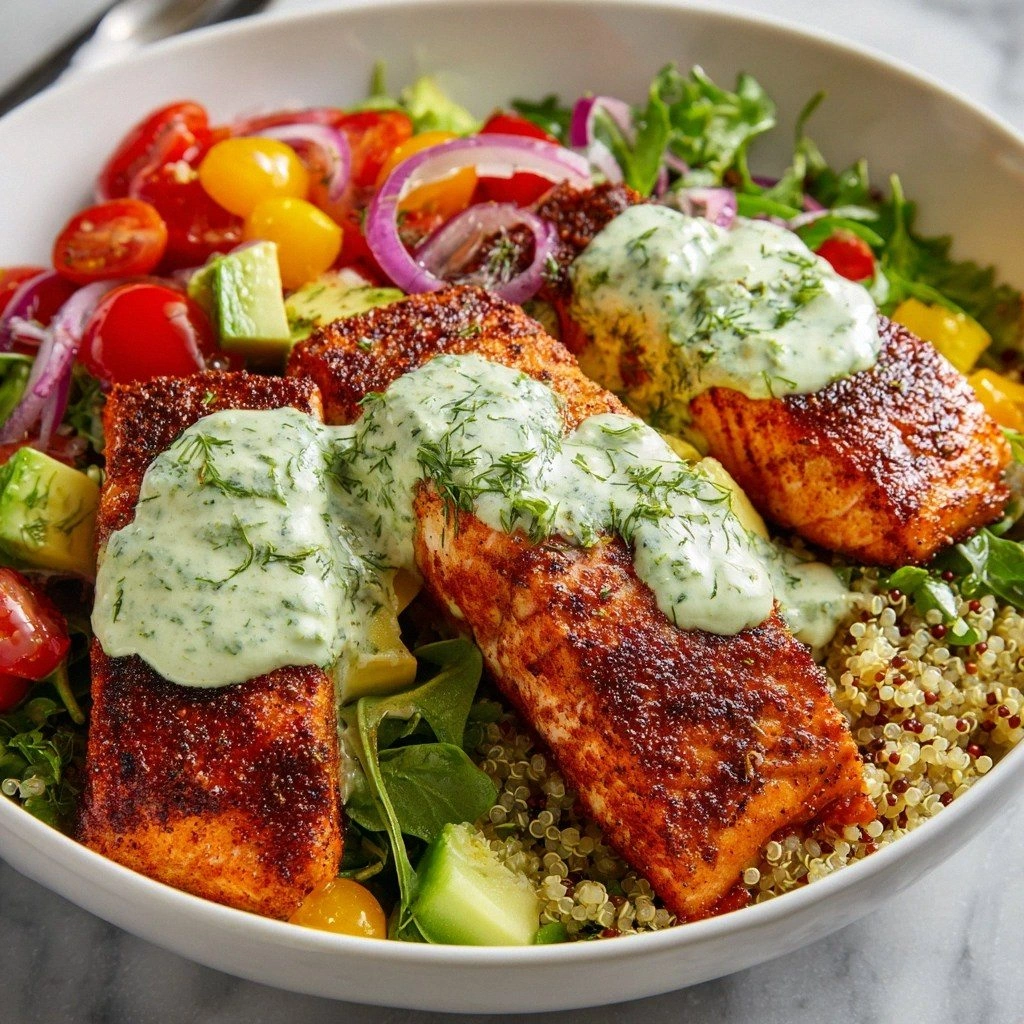
Now let’s talk about the bowl. The quinoa base is fluffy, nutty, and light—almost like a cloud of protein. It’s the perfect canvas for the salmon’s boldness, absorbing the juices and spices without being overpowered. The mixed greens add a fresh, peppery bite that cuts through the richness, while the cherry tomatoes contribute a burst of sweetness that brightens the plate. Avocado slices bring creaminess and a subtle, buttery undertone, creating a harmony of textures that dance on your tongue. The Greek yogurt dill sauce is the final flourish—tangy, herby, and silky, coating the bowl like velvet and tying all the flavors together. The result is a bowl that is not just a meal but an experience.
What makes this version stand out is not just the individual components but the way they interact. The blackening seasoning’s smoky heat is amplified by the high heat of the pan, creating a caramelized crust that locks in moisture. The quinoa’s neutral flavor allows the salmon’s boldness to shine, while the greens and tomatoes provide a fresh counterpoint that keeps the dish from feeling heavy. The creamy dill sauce adds a cool, herbal note that balances the heat, making each bite a balanced orchestra of flavors. This bowl is a testament to the idea that the sum is greater than its parts. If you’re looking for a dish that feels effortless yet extraordinary, this is the one. Picture yourself pulling this out of the oven, the whole kitchen smelling incredible, and everyone asking for the recipe.
I’ve always believed that a great bowl is a marriage of protein, grains, veggies, and sauce, and I’ve perfected that marriage in this dish. The blackened salmon is the star, but the supporting cast is just as important. The quinoa is fluffy, the greens are crisp, and the tomatoes burst with sweetness. The sauce is creamy and herbaceous, providing a finishing touch that elevates the entire bowl. The result is a dish that’s both satisfying and Instagram-worthy. It’s the kind of meal that makes you feel like you’ve just pulled off a culinary masterpiece, and you’ll be tempted to share it with the world. And trust me, you’ll want to keep this recipe on your list for every occasion.
I’ll be honest—when I first made this bowl, I ate half the batch before anyone else got a chance to try it. The flavors were so addictive that I couldn’t resist. But that’s the power of a great recipe: it’s so good that you want to share it, even if you’re tempted to hoard it. This version is hands down the best you’ll ever make at home, and it’s the kind of dish that will become a staple in your kitchen. If you’ve ever struggled with balancing bold flavors, you’re not alone—this recipe is designed to make it effortless. Stay with me here—this is worth it.
The secret to this bowl’s success lies in the details. The blackening seasoning’s blend of paprika, cayenne, and garlic powder creates a smoky, spicy crust that’s both aromatic and flavorful. The quinoa provides a protein-packed base that’s gluten-free and versatile. The mixed greens offer freshness and a peppery bite, while the cherry tomatoes add a pop of color and sweetness. Avocado slices bring creaminess and healthy fats, and the Greek yogurt dill sauce ties everything together with a tangy, herbaceous finish. Each component is carefully chosen to complement the others, resulting in a dish that’s both complex and harmonious.
One of the things that sets this recipe apart is its versatility. You can swap out quinoa for brown rice or couscous if you prefer a different grain. If you’re not a fan of red onions, try green onions or scallions for a milder flavor. The sauce can be tweaked with different herbs or a splash of lime juice for a citrusy twist. The beauty of this bowl is that it’s a framework, not a rigid rulebook, allowing you to adapt it to your taste and pantry. The result is a bowl that can evolve with your culinary preferences.
Another key element is the timing. The salmon should be cooked just until it’s opaque and flakes easily, preserving its moisture. The quinoa should be fluffy and lightly toasted to bring out its nutty flavor. The greens should be crisp, not wilted, to maintain their crunch. The sauce should be chilled before serving to keep it fresh and cool. These small details make the difference between a good bowl and a great one. The process is simple, but the outcome is a dish that feels like a gourmet creation.
If you’re new to blackening, you might be wondering how to get that perfect crust without burning the fish. The trick is to use a cast-iron skillet or a heavy non-stick pan and preheat it until it’s smoking hot. Then, coat the salmon with oil and the seasoning, and sear it for about 3-4 minutes on each side. The high heat caramelizes the spices, creating a smoky crust that locks in flavor and moisture. Watch the edges for that subtle sign of readiness: they should start pulling away from the pan, indicating that the crust is forming. Don’t rush it, but don’t overcook either—salmon is best when it’s just slightly pink in the center.
The sauce is the final flourish that ties everything together. Greek yogurt serves as a base, providing tang and creaminess, while fresh dill adds a bright, herby note that cuts through the richness of the salmon. Lemon juice brightens the sauce, adding a citrusy lift that balances the heat. The result is a sauce that coats the bowl like velvet, adding a silky finish to each bite. It’s the kind of sauce that you’ll find yourself reaching for again and again. If you’re looking for a quick, healthy sauce that doesn’t compromise on flavor, this is it.
One of the best parts of this recipe is how quickly it comes together. From prep to plate, you’re looking at 45 minutes—just enough time to enjoy a fresh, wholesome meal without feeling rushed. The cooking process is straightforward, with no complicated steps or hard-to-find ingredients. The result is a bowl that’s both impressive and approachable, making it perfect for busy weeknights or relaxed weekend dinners. You’ll be amazed at how quickly the flavors come together, creating a dish that feels both special and effortless.
I’ve spent countless hours tweaking this recipe, and the result is a bowl that feels like a well-balanced symphony of flavors and textures. The blackened salmon is bold, the quinoa is light, the greens are crisp, and the sauce is creamy and herbaceous. Every bite is a delight, and the dish is so versatile that it can be adapted to suit any dietary preference or pantry staples. The result is a bowl that’s both satisfying and Instagram-worthy. It’s the kind of meal that makes you feel like you’ve just pulled off a culinary masterpiece, and you’ll be tempted to share it with the world. And trust me, you’ll want to keep this recipe on your list for every occasion.
What Makes This Version Stand Out
- Taste: The blackening seasoning delivers a smoky, spicy bite that’s both bold and balanced, while the dill sauce adds a cool, herbaceous finish. The result is a flavor profile that lingers on the palate, leaving you craving more.
- Texture: The salmon’s crust is crisp and caramelized, the quinoa is fluffy and nutty, the greens are crisp, and the avocado is creamy. Every bite offers a new sensation.
- Ingredient Quality: Using fresh salmon, high-quality quinoa, and real dill ensures that each component shines. The ingredients are simple but powerful, creating a dish that feels premium without the fuss.
- Cooking Method: The pan-searing technique locks in juices and creates a perfect char without overcooking. The method is straightforward yet effective, making it accessible to cooks of all levels.
- Crowd Reaction: Friends and family rave about the bold flavors and the satisfying crunch of the blackened crust. The bowl is a hit at dinner parties, potlucks, and casual gatherings alike.
- Make-Ahead Potential: The quinoa can be cooked ahead, and the sauce can be prepped in advance. The salmon can be grilled fresh or reheated gently, ensuring the dish stays fresh and flavorful.
- Uniqueness: The combination of blackened salmon, quinoa, and creamy dill sauce is a fresh twist on traditional bowls. It’s a modern take that feels both classic and innovative.
- Health Factor: Packed with omega-3s, protein, and healthy fats, this bowl is a balanced, nutrient-dense meal that satisfies both taste buds and nutrition goals.
Alright, let’s break down exactly what goes into this masterpiece…
Inside the Ingredient List
The Flavor Base
Salmon fillets: Fresh salmon is the star of this dish, delivering a rich source of protein and omega-3 fatty acids. Its buttery texture contrasts beautifully with the crispy blackened crust. If you’re feeling adventurous, try a wild-caught fillet for a more robust flavor. The salmon’s natural oils help carry the spices, creating a harmonious taste. A well-seasoned fillet will elevate the entire bowl.
Blackening seasoning: This spice blend adds a bold, smoky flavor that’s both aromatic and deep. You can buy it pre-made or mix your own with paprika, cayenne, garlic powder, and a touch of salt. The seasoning’s heat is balanced by the coolness of the dill sauce. If you prefer a milder version, reduce the cayenne or add a pinch of cumin for earthiness. The blackening step is where the magic happens, caramelizing the spices into a flavorful crust.
The Texture Crew
Cooked quinoa: A nutritious base for your bowl, quinoa is gluten‑free and packed with protein. It’s light, fluffy, and has a slightly nutty flavor that complements the salmon. If you’re in a hurry, you can use pre‑cooked quinoa or even brown rice. The key is to keep it fluffy and not mushy so it holds its shape in the bowl.
Mixed greens: A colorful mix of greens adds freshness and crunch. Feel free to use spinach, arugula, or kale for variety. The greens provide a peppery bite that cuts through the richness of the salmon. If you’re in a pinch, baby lettuce or romaine works just fine. The greens keep the bowl light and balanced.
The Unexpected Star
Cherry tomatoes: These sweet little gems add a burst of flavor and color. They’re a natural sweetener that brightens the dish. If you’re craving a different flavor, diced bell peppers or cucumbers can replace them. The tomatoes’ juiciness keeps the bowl from feeling dry. They’re a simple but essential element that adds a pop of freshness.
Red onion: Thinly sliced red onion provides a zesty kick that adds depth. If you find it too strong, try green onions or scallions instead. The onion’s sharpness balances the creamy dill sauce. It adds a subtle crunch and a hint of sweetness when caramelized slightly. The onion’s flavor profile is a vital component of the overall taste.
The Final Flourish
Avocado: Creamy avocado slices elevate the dish, adding healthy fats and a buttery texture. If avocados aren’t ripe, sliced cucumbers can be a crunchy substitute. The avocado’s richness balances the smoky salmon. It adds a silky mouthfeel that pairs well with the dill sauce. The avocado is the final touch that brings everything together.
Greek yogurt: This is the base for your creamy dill sauce, offering a tangy flavor and a healthy twist. You can use sour cream if you prefer a richer taste. The yogurt’s thickness keeps the sauce from separating. It provides a smooth, cooling counterpoint to the heat. The yogurt is the foundation that holds the sauce together.
Fresh dill: The star herb in the sauce, dill adds a refreshing taste. If you can’t find fresh dill, dried dill will work in a pinch. Dill’s bright, slightly sweet flavor cuts through the richness of the salmon. It’s a herb that brings a unique aroma and flavor to the bowl. The dill is essential for that herbaceous finish.
Lemon juice: A splash of lemon juice brightens the sauce and balances the flavors. Lime juice can be a great alternative if you’re out of lemons. The citrus adds a bright, zesty note that lifts the entire dish. It also helps keep the avocado from browning. The lemon juice is a small but powerful addition.
Salt and pepper: Essential for seasoning, these staples enhance the overall flavor of your dish. They’re the final touch that brings all the components together. A pinch of salt and pepper is enough to bring out the flavors without overpowering them. They’re the subtle seasoning that ties everything together.
Everything's prepped? Good. Let's get into the real action…
The Method — Step by Step
- Begin by patting the salmon fillets dry with paper towels. A dry surface ensures a crisp, caramelized crust. Season each fillet generously with salt and pepper, then coat with the blackening seasoning, pressing it onto the flesh. This step locks in flavor and creates a uniform spice distribution. Let the fillets rest for 5 minutes to let the seasoning set. This brief rest helps the spices adhere better during cooking.
- Heat a cast‑iron skillet over medium‑high heat until it’s smoking hot. Add a tablespoon of neutral oil (like grapeseed or canola) and swirl to coat the surface. The high heat is essential for achieving that perfect char. Once the oil shimmers, place the salmon fillets skin‑side down. The sizzling sound is the first indicator that the crust is forming. Cook for 4‑5 minutes, then flip carefully.
- After flipping, continue cooking for another 3‑4 minutes or until the salmon is opaque and flakes easily. The edges should start pulling away from the pan, indicating that the crust is crisp. Avoid overcooking; a slightly pink center keeps the fish moist. Once done, transfer the fillets to a plate and tent loosely with foil to keep them warm. The foil prevents the fish from drying out while you assemble the bowl.
- While the salmon rests, prepare the creamy dill sauce. In a bowl, combine Greek yogurt, chopped fresh dill, lemon juice, and a pinch of salt. Whisk until smooth and adjust the seasoning to taste. The sauce should be thick yet pourable, coating the bowl like velvet. If the sauce is too thick, add a splash of water or milk to reach your desired consistency. Chill the sauce in the fridge for at least 10 minutes to let the flavors meld.
- Cook the quinoa according to package instructions, using a ratio of 2 cups water to 1 cup quinoa. Once cooked, fluff with a fork and let it cool slightly. For a nutty flavor, toast the quinoa in a dry skillet for 2 minutes before adding water. This step adds depth to the grain and prevents it from becoming mushy. The quinoa should be fluffy, not sticky, to maintain a pleasant texture in the bowl.
- Dice the cherry tomatoes, slice the red onion thinly, and cut the avocado into slices or cubes. Arrange the mixed greens in a shallow dish or directly in the bowl as a base. The greens provide a fresh, peppery bite that balances the richness of the salmon. The tomatoes add sweetness, while the avocado brings creaminess. Keep the vegetables crisp and vibrant.
- Assemble the bowl by placing a generous scoop of quinoa at the bottom, then layering the mixed greens, cherry tomatoes, red onion, and avocado. Lay the blackened salmon fillets on top, letting the juices run over the vegetables. Drizzle the creamy dill sauce over the entire bowl, ensuring every component is coated. The sauce’s coolness balances the smoky heat, creating a harmonious flavor profile. Garnish with extra dill or lemon wedges if desired.
- Serve immediately, while the salmon is still warm and the quinoa is fluffy. The contrast of hot fish and cool sauce is a sensory delight. If you’re preparing ahead, store the quinoa, greens, and sauce separately, then combine just before serving to keep everything fresh. This bowl is perfect for a quick weeknight dinner or a light lunch that satisfies.
That's it — you did it. But hold on, I've got a few more tricks that'll take this to another level…
Insider Tricks for Flawless Results
The Temperature Rule Nobody Follows
The key to a perfect blackened crust is maintaining a consistent, high heat. Use a cast‑iron skillet and preheat it until it starts to smoke. If the pan isn’t hot enough, the seasoning will steam rather than sear, resulting in a soggy crust. Keep the heat steady; a sudden drop will cause uneven cooking. The high heat caramelizes the spices and locks in moisture, giving you that coveted smoky flavor.
Why Your Nose Knows Best
The scent of the salmon is your best indicator of doneness. When the aroma turns from raw fish to a warm, savory perfume, it’s time to flip. The smell is a subtle cue that the crust is forming and the inside is cooking. Trust your nose; it’s more reliable than a timer when you’re in the kitchen.
The 5-Minute Rest That Changes Everything
After cooking, let the salmon rest for five minutes before slicing. This short rest allows the juices to redistribute, ensuring each bite stays moist. Cutting too early can cause the fillet to dry out and lose its buttery texture. The rest period also gives the blackening seasoning time to set, giving you a more pronounced crust.
Keep the Greens Crisp
If you want the greens to stay crisp, add a splash of vinegar or lemon juice to the bowl just before serving. This acid helps keep the leaves firm and bright. Toss the greens lightly with the dressing to coat them evenly, then add the other ingredients. The result is a bowl that feels fresh and vibrant.
Use a Skillet with a Lid
If you’re cooking multiple fillets at once, cover the skillet with a lid for the first minute of cooking. This traps steam, helping the fish cook evenly while still forming a crisp crust. Once the steam escapes, remove the lid to allow the surface to dry and char. The lid trick ensures consistent results across all fillets.
Creative Twists and Variations
This recipe is a playground. Here are some of my favorite ways to switch things up:
Spicy Thai Twist
Swap the blackening seasoning for a Thai curry paste and add sliced chilies. Use jasmine rice instead of quinoa and finish with a drizzle of coconut milk. The result is a bowl that’s spicy, fragrant, and utterly comforting.
Mediterranean Medley
Replace the quinoa with couscous, add olives, and sprinkle feta cheese on top. Swap the dill sauce for tzatziki made with cucumber and mint. The flavors are bright, briny, and refreshingly Mediterranean.
Southwestern Kick
Add corn kernels, black beans, and a sprinkle of cumin to the bowl. Use a lime‑coriander yogurt sauce instead of dill. The bowl becomes a vibrant, spicy fiesta that’s perfect for summer.
Asian Fusion
Use soba noodles as the base, add sliced shiitake mushrooms, and top with a sesame ginger sauce. The smoky salmon pairs with the umami of mushrooms and the nutty flavor of soba for an unexpected twist.
Vegan Version
Swap the salmon for marinated tofu or tempeh and use a vegan yogurt for the sauce. Add roasted sweet potatoes for extra heartiness. The bowl remains hearty, flavorful, and completely plant‑based.
Storing and Bringing It Back to Life
Fridge Storage
Store the assembled bowl in an airtight container for up to 2 days. Keep the sauce separate to prevent the greens from wilting. When ready to eat, let the bowl sit at room temperature for 10 minutes before serving. This will allow the flavors to meld and the salmon to regain its warmth.
Freezer Friendly
The quinoa, greens, and sauce can be frozen separately for up to 3 months. The salmon can be cooked and frozen, then reheated in a skillet. When reheating, add a splash of water to the pan to create steam and keep the fish moist. The bowl will taste almost as good as when it was freshly made.
Best Reheating Method
Reheat the salmon in a skillet over medium heat with a splash of water or broth. Cover for 2 minutes to create steam. This gentle method preserves the moisture and texture. The quinoa can be warmed in the microwave with a damp paper towel, and the sauce should be stirred before serving to restore its consistency.