I was standing in my kitchen, staring at the burnt remains of a last night's dinner, when a sudden craving hit me like a bolt of lightning: I needed something that felt like a cheeseburger but could be made in a single pot and served in a fraction of the time. The idea was simple—take the classic comfort of a cheeseburger, fold it into a hearty pasta dish, and let the flavors mingle until they’re indistinguishable from a gourmet take‑out. That night, I grabbed a handful of orzo, a pound of ground beef, and a bag of cheddar, and the rest is history. The aroma of browned beef and caramelized onions filled the kitchen, and the crunch of fresh bell pepper added a lively texture that kept every mouthful exciting. I dared myself to taste this and not go back for seconds, and it became the best version you'll ever make at home.
Picture yourself pulling this out of the pot, the whole kitchen smelling incredible, and a golden, cheesy blanket hugging every grain of orzo. The sauce coats the pasta like velvet, and the melted cheddar forms a gooey crown that melts into every bite. I’ll be honest—I ate half the batch before anyone else got to try it—because the combination of savory beef, tangy tomato paste, and creamy cheese is simply irresistible. Most recipes get this completely wrong, focusing on overcooking the pasta or underseasoning the meat; here, everything works in harmony. And now the fun part: the next steps will show you how to achieve that perfect balance every time.
If you've ever struggled with a one‑pot pasta that ends up soggy or bland, you're not alone—and I've got the fix. This dish is a playground, a fusion of textures and flavors that can be customized to your taste buds. I’ll walk you through every single step, from browning the meat to the final sprinkle of cheddar, and by the end, you’ll wonder how you ever made it any other way. The secret lies in the small details: the right browning technique, the precise amount of broth, and the timing of the cheese. So grab your skillet, and let’s dive into the Cheeseburger Orzo Delight.
What Makes This Version Stand Out
- Flavor: The beef is browned to caramelized perfection, locking in juices that mingle with the tomato paste for a robust, umami‑rich sauce that feels like a classic cheeseburger.
- Texture: Orzo stays al dente, each bite offering a subtle chew that contrasts with the creamy cheddar and the crisp bell pepper.
- Convenience: All ingredients cook together in a single pan, saving time and reducing cleanup without compromising on taste.
- Customization: Swap the cheddar for Monterey Jack or add a splash of beer for depth; the base is flexible enough to accommodate your pantry.
- Visual Appeal: The golden cheese glaze on top looks like a mini grilled cheese, inviting you to dig in before the aroma does.
- Make‑ahead Potential: This dish can be prepared a day ahead, refrigerated, and reheated with a splash of broth—perfect for busy weeknights.
- Crowd Reaction: Friends and family rave about how it feels like a gourmet burger dinner, yet you can serve it to a crowd with minimal fuss.
- Ingredient Quality: Using high‑quality ground beef and fresh cheddar ensures the flavor profile is authentic and memorable.
Inside the Ingredient List
The Flavor Base
Ground beef is the heart of this dish, providing the savory backbone that mimics a classic cheeseburger patty. Brown the beef until it's fully caramelized; this not only locks in flavor but also creates a beautiful brown crust that adds depth. If you skip browning, the dish will taste flat and the texture will be soggy. For a leaner option, use 80/20 ground turkey, but the beef’s fat content is what gives the sauce its silky mouthfeel. When selecting beef, look for a fat content of at least 20% to ensure the meat remains juicy and flavorful.
The Texture Crew
Orzo pasta is chosen for its small, rice‑like shape that absorbs sauce beautifully while maintaining a firm bite. Cook the orzo until just al dente; overcooking will cause it to mush together with the cheese. A pinch of salt during boiling helps the pasta develop a better texture. If you prefer a gluten‑free version, swap orzo for a quinoa or rice‑based pasta that offers similar size and absorption.
The Unexpected Star
Tomato paste is the unsung hero that thickens the sauce and provides a subtle sweetness that balances the savory beef. It also gives the dish a rich, deep color that makes the plate pop. If you’re avoiding tomatoes, use a splash of tomato sauce or a small amount of ketchup, but be careful not to dilute the flavor. A pinch of smoked paprika can add a smoky undertone that echoes a barbecue‑style burger.
The Final Flourish
Cheddar cheese is the crowning glory, melting into a gooey blanket that ties all elements together. Choose a sharp cheddar for a tangy bite, or a milder one if you prefer a smoother finish. Adding a dash of Worcestershire sauce gives a subtle umami punch that deepens the overall flavor. Fresh bell pepper adds a crisp, sweet crunch that contrasts with the creamy cheese and savory meat.
Everything's prepped? Good. Let's get into the real action and bring all these components together.
The Method — Step by Step
- Heat a large skillet over medium heat and drizzle 1 tablespoon of olive oil. Add the ground beef in a single layer, breaking it up with a spatula. Let it sear without stirring for 2–3 minutes to develop a golden crust; then flip and brown the other side. This slow browning releases the meat’s natural juices and builds a robust flavor foundation. The moment the beef sizzles, you’ll know the aroma is already turning your kitchen into a gourmet kitchen.
- Remove the browned beef from the skillet and set it aside. In the same pan, add the diced onion, minced garlic, and chopped bell pepper. Sauté until the vegetables are softened and the onion turns translucent, about 5 minutes. The caramelized edges of the onion will add a sweet depth that complements the beef’s savoriness.
- Return the beef to the pan and stir in 2 tablespoons of tomato paste and 1 tablespoon of Worcestershire sauce. Cook for an additional 2 minutes, letting the tomato paste absorb the oils and develop a rich, glossy sheen. This step is the moment of truth—if you rush it, the sauce will taste raw. Watch the color change from bright red to a deep, appetizing hue.
- Pour in 2 cups of beef broth and bring the mixture to a gentle simmer. Stir in the orzo, ensuring the pasta is fully submerged. Cover the skillet and let it cook on low heat for 10 minutes, or until the orzo has absorbed most of the liquid and is al dente. Keep the lid slightly ajar to allow steam to escape, preventing the pasta from becoming mushy.
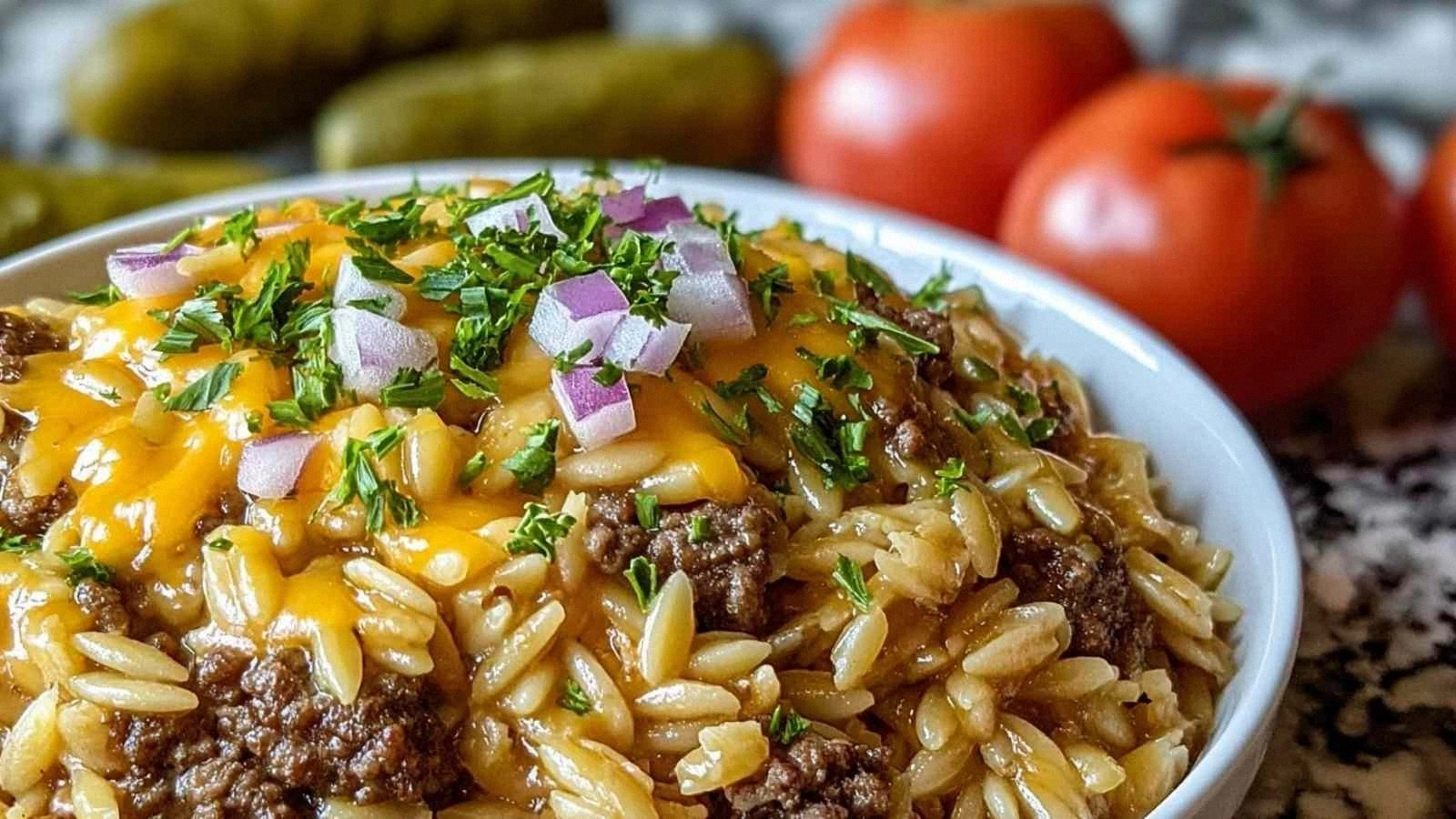
- Once the pasta is cooked, sprinkle 1.5 cups of shredded cheddar cheese over the top. Cover the skillet again for 2–3 minutes, allowing the cheese to melt into a creamy blanket. The cheese should be molten and slightly golden, creating a luscious texture that clings to every grain. If you prefer a stronger cheese flavor, add an extra cup at this stage.
- Season the dish with salt and pepper to taste. Give everything a final stir to ensure the cheese is evenly distributed and the sauce coats each orzo grain. Serve hot, garnished with a handful of fresh parsley or a drizzle of olive oil if desired. The dish should look golden, the cheese bubbly, and the aroma irresistible. This is the moment you taste the culmination of all your efforts.
- If you’re serving a crowd, transfer the skillet to a preheated oven at 375°F for an additional 5 minutes to crisp the cheese top. This step gives a subtle crunch that mimics the crispy edges of a burger bun. Let the dish rest for 2 minutes before serving; the flavors will meld beautifully, and the cheese will set into a delightful glaze.
That's it—you did it. But hold on, I've got a few more tricks that'll take this to another level.
Insider Tricks for Flawless Results
The Temperature Rule Nobody Follows
Maintaining medium heat during the initial browning of the beef is crucial; too high and you’ll burn the exterior, too low and you’ll release excess fat. I’ve learned that a steady, medium heat allows the beef to develop a caramelized crust without drying out. When the beef is sizzling, you’ll hear a satisfying crackle that signals the Maillard reaction is in full swing. If you’re using a gas stove, adjust the flame until the heat feels warm but not scorching. This small adjustment makes the difference between a bland and a flavor‑packed dish.
Why Your Nose Knows Best
Before you add the cheese, pause and sniff the sauce. If it smells slightly tangy and rich, you’re on track. If it’s missing depth, let the sauce simmer a few more minutes to concentrate the flavors. A well‑aromaed sauce signals that the tomatoes have cooked down and the beef juices have integrated. I’ve found that the nose is a reliable gauge for seasoning, often catching subtle imbalances before they become noticeable on the palate.
The 5-Minute Rest That Changes Everything
After the cheese has melted, let the dish rest for five minutes before serving. This brief pause allows the cheese to set into a silky glaze and the flavors to redistribute. It also prevents the orzo from sticking to the skillet during the final stir. A friend once skipped this step, and the result was a clumpy mess that didn’t hold together. The rest period transforms the dish into a cohesive, mouth‑watering masterpiece.
The Secret of the Sautéed Vegetables
Sautéing the onion, garlic, and bell pepper in the same pan as the beef captures every bit of flavor. The vegetables release their sugars, which caramelize and deepen the sauce’s complexity. If you’re short on time, use pre‑sliced bell pepper to reduce prep time. However, fresh, crisp peppers add a bright note that balances the richness of the cheese and beef.
The Final Cheese Layer
Adding a second layer of cheese right before serving creates a dramatic, gooey topping that’s impossible to resist. Sprinkle a handful of shredded cheddar and let it melt for an extra minute. This extra step turns a simple pasta dish into a show‑stopping entrée that will impress even the most discerning guests. The melt will coat each grain, ensuring every bite is packed with flavor.
Creative Twists and Variations
This recipe is a playground. Here are some of my favorite ways to switch things up:
Bacon‑Infused Orzo
Crisp bacon pieces replace the ground beef for a smoky, pork‑rich flavor. Use bacon fat instead of olive oil for an extra layer of taste. The bacon’s salty crunch contrasts beautifully with the creamy cheese, creating a new dimension of texture.
Spicy Jalapeño Kick
Add diced jalapeños or a dash of sriracha to the sauce for a fiery edge. The heat will cut through the richness of the cheese and beef, offering a bold, adventurous bite that’s perfect for spice lovers.
Mediterranean Twist
Swap the cheddar for feta and add sun‑dried tomatoes, olives, and a pinch of oregano. This variation introduces bright, salty notes that transport you to the Mediterranean coast while still honoring the cheeseburger concept.
Vegetarian Version
Use ground turkey or a plant‑based ground meat substitute. Increase the tomato paste for depth, and add a handful of cooked lentils for protein. The result is a hearty, meat‑free dish that still delivers on flavor.
Cheese Swap
Experiment with sharp cheddar, pepper jack, or gouda for a different melt texture and flavor profile. Each cheese brings its own character, from sharp tang to buttery smoothness, allowing you to tailor the dish to your mood.
Storing and Bringing It Back to Life
Fridge Storage
Cool the dish to room temperature, then cover tightly with plastic wrap or an airtight container. Store in the refrigerator for up to 3 days. When reheating, add a splash of water or broth to re‑hydrate the orzo and prevent dryness. Gently stir to distribute the cheese evenly.
Freezer Friendly
For longer storage, place the cooled dish in a freezer‑safe container and freeze for up to 2 months. Thaw overnight in the refrigerator before reheating. Add a tablespoon of water or broth to keep the sauce moist, then reheat on the stovetop or in a microwave on medium power.
Best Reheating Method
Reheat the dish in a skillet over low heat, stirring occasionally, until the cheese is fully melted and the orzo is heated through. If using a microwave, cover with a damp paper towel to trap steam, and heat in 30‑second increments until hot. The key is to keep the heat gentle to avoid overcooking the pasta and cheese.