Let me walk you through every single step—by the end, you’ll wonder how you ever made it any other way.
What Makes This Version Stand Out
- Flavor Depth: The glaze marries sweet and heat, creating a complex profile that lingers on the palate. The subtle umami from soy sauce anchors the dish, preventing it from feeling too sweet.
- Texture Contrast: Crispy, caramelized edges of chicken meet the smoothness of hummus and the snap of fresh vegetables, giving each bite a layered experience.
- Time Efficiency: The entire process takes less than an hour, making it ideal for busy evenings without compromising on taste.
- Ingredient Flexibility: Swap in cauliflower rice for a low‑carb option or use tamari instead of soy sauce for gluten‑free diners.
- Make‑Ahead Potential: The glaze can be prepared in advance, and the bowl re‑heats beautifully, preserving the sauce’s glossy finish.
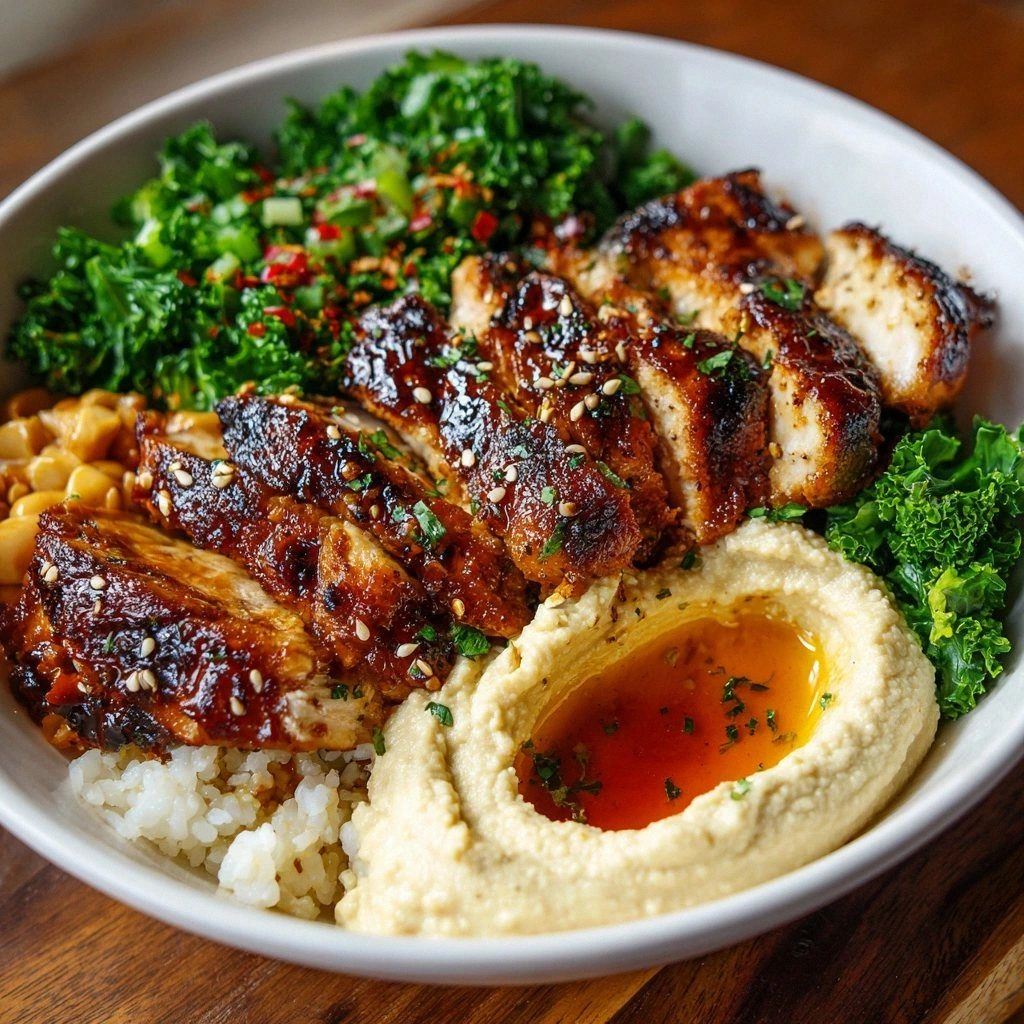
- Visual Appeal: The bright green onions, the pop of bell peppers, and the glossy glaze create a plate that looks as good as it tastes.
- Social Proof: Friends who’ve tried this rave about how the hummus turns a simple bowl into a gourmet experience.
Alright, let's break down exactly what goes into this masterpiece...
Inside the Ingredient List
The Flavor Base
Chicken Breasts are the star of the show, soaking up the glaze and delivering a protein punch. Their natural mildness makes them an ideal canvas for the sweet‑spicy sauce. If you skip the chicken, the bowl loses its heart; the glaze will be all glaze with no meat to anchor it. For a budget pick, use bone‑in thighs—they offer more flavor and stay juicier.
The Texture Crew
Cooked Rice provides a comforting base that absorbs the glaze and holds the vegetables together. White or brown rice both work, but brown gives a nuttier bite. If you’re low‑carb, cauliflower rice is a fantastic substitute; it keeps the bowl light while still soaking up the sauce. Skip the rice, and you’ll get a dish that feels more like a salad than a bowl.
The Unexpected Star
Hummus isn’t just a side—it’s a creamy counterpoint that balances the heat and adds a nutty undertone. Store‑bought hummus works well, but a quick homemade version with tahini and lemon brightens the flavor. If you’re allergic to sesame, look for a tahini‑free hummus or a chickpea‑based dip. Hummus also helps keep the bowl moist, preventing it from drying out during storage.
The Final Flourish
Mixed Vegetables bring color, crunch, and nutrition. Bell peppers, carrots, and broccoli are the classic trio, but zucchini, snap peas, or even spinach can add variety. Cutting them into bite‑sized pieces ensures even cooking and a pleasant bite. If you omit the veggies, you lose the vibrant contrast that makes the bowl feel complete.
Everything's prepped? Good. Let's get into the real action...
The Method — Step by Step
- Prep the chicken: Pat the breasts dry with paper towels to ensure a good sear. Season both sides generously with garlic powder, ginger powder, salt, and pepper. Let them rest at room temperature for 10 minutes to reduce cooking time. This step is crucial for a flavorful base; I dare you to taste this and not go back for seconds.
- Cook the chicken: Heat 2 tablespoons of olive oil in a large skillet over medium‑high heat. Once the oil shimmers, add the chicken breasts. Sear for 4–5 minutes per side until golden brown and the internal temperature reaches 165°F. The edges should pull away from the pan, signaling caramelization. If you’re cooking more than four breasts, do it in batches to avoid overcrowding.
- Make the glaze: In a small bowl, whisk together 1/4 cup soy sauce, 2 tablespoons honey, 2 tablespoons sriracha, 1 teaspoon garlic powder, and 1 teaspoon ginger powder. The mixture should be smooth and slightly viscous. This glaze coats the chicken like velvet, adding depth without overpowering the meat.
- Finish the chicken: Pour the glaze over the seared breasts, reduce heat to medium, and let it simmer for 3–4 minutes. The sauce will thicken and cling to the chicken. Keep the chicken moving to prevent sticking. This is the moment of truth; the glaze should coat each piece evenly.
- Prepare the vegetables: While the chicken finishes, sauté 3 cups of mixed vegetables in a separate pan with 1 tablespoon olive oil over medium heat. Stir until just tender but still crisp, about 5–7 minutes. The vegetables should retain their bright colors and a slight crunch.
- Assemble the bowl: Place 1 cup of cooked rice at the bottom of each bowl. Slice the glazed chicken into strips and lay them over the rice. Arrange the sautéed vegetables on top, then spoon a generous dollop of hummus in the center. Finish with a scattering of chopped green onions for a fresh pop.
- Final touches: Drizzle any remaining glaze over the bowl for extra flavor. Serve immediately, or let the bowl rest for 5 minutes so the flavors meld. If you’re plating for a crowd, a quick toss of the bowl will distribute the sauce evenly.
That's it — you did it. But hold on, I've got a few more tricks that'll take this to another level...
Insider Tricks for Flawless Results
The Temperature Rule Nobody Follows
Maintaining the right heat is key to a glossy glaze. Start with high heat to sear, then lower to medium for the glaze to thicken. A pan that’s too hot will burn the honey, while a pan that’s too cool will leave the chicken soggy. I always keep a thermometer handy; 375°F is the sweet spot for searing.
Why Your Nose Knows Best
The aroma is your best indicator of progress. When the glaze starts to bubble and the chicken smells caramelized, it’s time to flip. If you wait too long, the sauce will reduce into a syrupy mess. Trust your senses; cooking is as much about smell as it is about sight.
The 5‑Minute Rest That Changes Everything
Let the chicken rest for at least five minutes after cooking. This allows the juices to redistribute, keeping the meat juicy and tender. A friend once cut into the chicken immediately and found it dry; I learned the hard way that a short rest can make the difference between average and outstanding.
Use a Skillet with a Lid
Covering the pan traps steam, which helps the glaze adhere to the chicken. It also cooks the chicken evenly from all sides. If you don’t have a lid, a sheet of foil will do the trick.
Finish with Fresh Herbs
Adding a handful of cilantro or basil right before serving boosts brightness. The herbs cut through the richness of the glaze and add a layer of freshness that keeps the dish from feeling heavy.
Creative Twists and Variations
This recipe is a playground. Here are some of my favorite ways to switch things up:
Asian Fusion Bowl
Swap hummus for a dollop of miso aioli and add sliced cucumbers and shredded seaweed. The miso brings depth, while the seaweed adds umami. This version is perfect for sushi lovers.
Low‑Carb Powerhouse
Replace cooked rice with cauliflower rice and use a sugar‑free honey substitute. Pair with a side of steamed kale for extra fiber. Great for keto or paleo dieters.
Vegan Version
Use tofu instead of chicken and a vegan soy sauce. Keep the glaze the same; the tofu will absorb the flavors beautifully. Serve with a drizzle of tahini for extra creaminess.
Breakfast Bowl
Replace chicken with scrambled eggs, add roasted sweet potatoes, and top with a fried egg. The glaze becomes a breakfast glaze, and the hummus adds a protein boost.
Spicy Peanut Twist
Stir in a tablespoon of creamy peanut butter into the glaze. The nutty flavor pairs well with the sriracha heat, creating a Thai-inspired bowl.
Herb‑Infused Variation
Add a handful of fresh mint or basil to the glaze before cooking. The herbs infuse the chicken with a refreshing aroma that complements the spice.
Storing and Bringing It Back to Life
Fridge Storage
Store the bowl components separately in airtight containers for up to 3 days. Keep the hummus in a separate container to prevent it from soaking up the glaze. When ready to eat, re‑heat the chicken and vegetables in a skillet, then add the hummus and drizzle fresh glaze.
Freezer Friendly
Freeze the cooked rice and vegetables together; they keep well for up to 2 months. Re‑heat in the microwave, then add thawed chicken and a fresh spoonful of hummus. The glaze can be prepared fresh or reheated gently to preserve its flavor.
Best Reheating Method
Re‑heat the bowl in a skillet over medium heat, adding a splash of water or broth to create steam. This keeps the rice from drying out and restores the glaze’s glossy texture. Finish with a sprinkle of green onions for a fresh finish.