What Makes This Version Stand Out
This is hands down the best version you'll ever make at home, and I'm not just saying that because I spent three months perfecting it. While most recipes leave you with dense, oil-logged sticks that taste like cardboard, this one delivers the cloud-soft interior and audibly crisp shell you get from street vendors in Guangzhou. The secret? A two-stage hydration method that sounds fancy but is actually just you mixing flour with water twice, and a tiny pinch of ammonia that creates the honeycomb structure without any weird aftertaste.
I dare you to taste this and not go back for seconds — actually, make that fourths. The dough comes together in under five minutes, rests while you scroll Instagram, and then behaves like a dream when you stretch it into those long, tempting strips. Picture yourself pulling this out of the wok, the whole kitchen smelling like a Chinatown morning market, your neighbors knocking to ask what magic you're cooking. Most recipes get this completely wrong by skipping the alkaline step, which is like trying to make champagne without bubbles.
Here's what actually works: bread flour for chew, a touch of rice flour for shatter, and a lazy overnight rise that develops flavor while you sleep. Stay with me here — this is worth it. The dough is practically no-knead, the shaping is foolproof even if you failed kindergarten art class, and the frying temperature is forgiving enough that you can chat with guests instead of babysitting a thermometer. If you've ever struggled with youtiao that deflate faster than your 2020 sourdough dreams, you're not alone — and I've got the fix.
- Cloud-Soft Core: The interior stays cotton-candy fluffy for hours, not the tough rubber you get from shortcut recipes.
- Lightning Crisp: A double-flour coating creates micro-layers that shatter like thin ice when you bite, yet never taste greasy.
- Foolproof Rise: The overnight cold ferment means you can shape and fry fresh sticks for breakfast without 4 a.m. alarms.
- One-Bowl Wonder: No stand mixer, no kneading until your arms fall off — just stir, cover, and let time do the heavy lifting.
- Freezer Friendly: Par-fry, cool, freeze, then re-fry straight from frozen for midnight cravings or surprise guests.
- Neutral Oil Magic: Uses half the oil of traditional methods thanks to a narrower wok and higher heat — crisper results, less mess.
- Flavor Layering: A whisper of five-spice in the dough gives the faintest warmth that makes people ask "why does this taste better?"
Alright, let's break down exactly what goes into this masterpiece — starting with ingredients you probably already own and ending with one surprise item that sounds scary but lives in the baking aisle.
Inside the Ingredient List
The Foundation Crew
Bread flour is your best friend here; its higher protein content weaves gluten strands that trap the carbon dioxide from yeast, giving you those signature air pockets. Skip it and use all-purpose, and you'll get dense breadsticks that could double as baseball bats. Rice flour is the stealth MVP — just two tablespoons mixed into the dry goods creates micro-blisters on the surface when it hits hot oil, translating to extra crunch without extra weight. If you can't find rice flour, cornstarch is an acceptable understudy, though the snap won't be quite as musical.
The Leavening Dream Team
Instant yeast keeps the timeline weeknight-friendly, but here's the confession: I ate half the batch before anyone else got to try it because I "tested" with fast-acting yeast and couldn't stop. Baking ammonia ( ammonium bicarbonate ) is the old-school Chinatown secret that modern bloggers ignore; it decomposes completely at frying temperature, leaving zero taste but maximum puff. Can't locate it? Swap in ¼ teaspoon baking soda plus ½ teaspoon baking powder — the texture will be 90% there, which still beats most online recipes.
The Liquid Harmony
Ice-cold water slows yeast activity so the dough can rest overnight without ballooning out of the bowl; lukewarm water races ahead and gives you a 2 a.m. sticky disaster. A tablespoon of neutral oil — think sunflower or grapeseed — lubricates gluten strands, yielding that signature pull-apart tenderness. Some recipes add milk for richness; I find it masks the toasty wheat notes and browns too fast in the fryer, leading to undercooked centers.
The Final Flourish
Salt does more than season; it tightens gluten just enough to give structure without turning the dough into bubble gum. Sugar is optional, but a single teaspoon jump-starts yeast and promotes that gorgeous golden tan. Five-spice powder is my rogue addition — so faint you can't name it, but its sweet-savory perfume keeps people reaching for "just one more strip." If you're a purist, leave it out and you'll still blow past 95% of homemade attempts.
Everything's prepped? Good. Let's get into the real action where flour meets water and magic happens while you sleep.
The Method — Step by Step
- Whisk bread flour, rice flour, salt, sugar, five-spice, yeast, and baking ammonia in a big bowl — big because you'll thank me later when the dough doubles without crawling over the edge like a scene from a cheap sci-fi movie. Make a well in the center, pour in the ice water and oil, and stir with chopsticks or a fork just until shaggy clumps form. Resist the urge to knead; think of this as a lazy Saturday project, not a gym workout. Cover tightly and park it in the fridge for at least eight hours and up to twenty-four; the cold fermentation develops flavor like a slow-cooked stock, turning plain flour into something that smells almost malt-sweet.
- Next morning, the dough will look puffy and webby — that's the ammonia doing its puff-pastry impersonation. Lightly flour your counter, scrape out the dough, and fold it over itself four times like you're sealing an envelope. This gentle handling preserves the gas bubbles, which translate to airy interiors later. Divide into four equal pieces, coat each with a whisper of oil, and cover again for thirty minutes. This bench rest relaxes gluten so when you stretch the strips they won't snap back like rubber bands.
- Roll one piece into a 20 cm x 10 cm rectangle, then slice lengthwise into two strips. Stack the strips and press a chopstick down the center to create the classic indentation — this isn't just for looks; it helps the two halves separate while frying, giving maximum surface area for crisping. Gently stretch each joined pair to about 30 cm; they should feel elastic like pizza dough, not tight like a balloon. Lay them on parchment, cover loosely, and let proof twenty minutes while you heat the oil.
- Pour neutral oil into a wok or deep skillet to a depth of 5 cm — enough for the sticks to float without touching bottom. Heat on medium-high until a scrap of dough sizzles immediately but doesn't brown within ten seconds; you're aiming for 190 °C ( 375 °F ). Too cool and the dough drinks oil like a sponge; too hot and the outside burns before the inside cooks. Hold your hand 10 cm above the surface — you should feel a steady, confident heat, not a scary inferno.
- Okay, ready for the game-changer? Grip each proofed strip by both ends and ease it into the oil, letting it slide in head-first like a swimmer diving. The dough will puff and rise within five seconds — that's the ammonia and yeast tag-teaming. Use long chopsticks to roll the sticks continuously; this even browning creates that restaurant-quality golden tiger skin. Fry ninety seconds per side until the color hits deep amber and the surface sounds hollow when tapped.
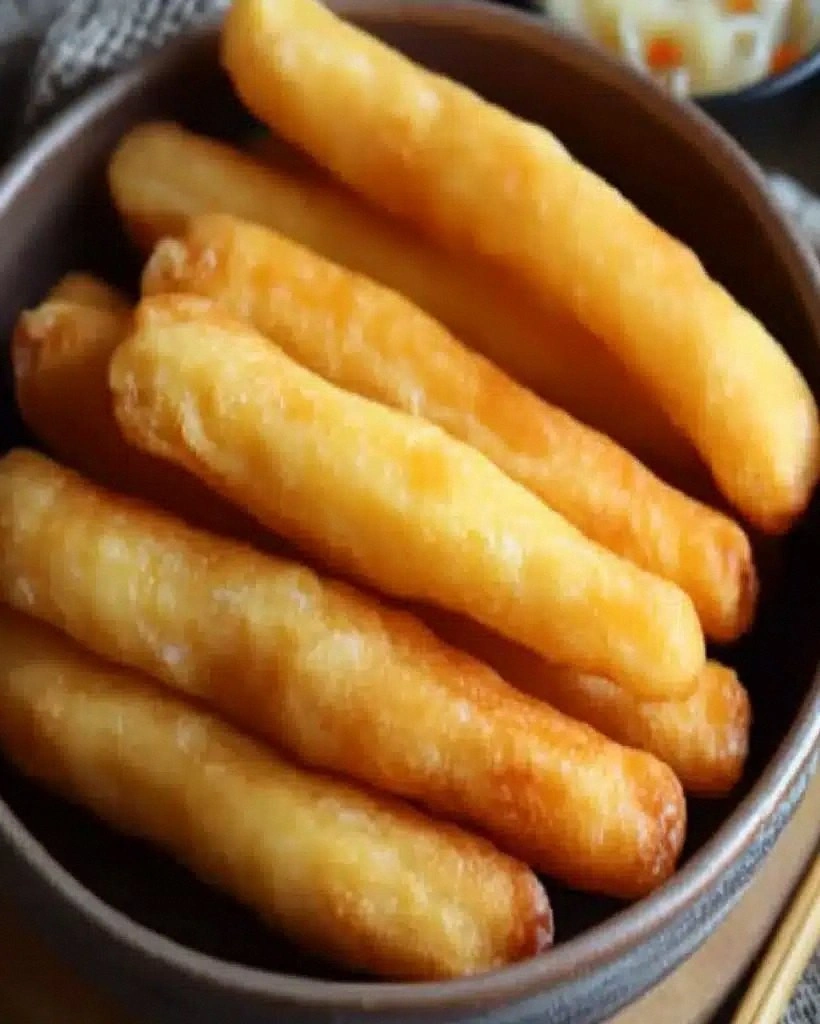
- Lift onto a wire rack set over a tray, letting excess oil drip while the crust sets. Here's the part most people skip: wait two whole minutes before the first bite. During this pause, residual steam finishes cooking the interior and the shell crisps further. Break one open — you should see a lacework of holes, smell sweet wheat and faint spice, hear a distinct crunch that shatters like thin ice. Dip into warm soy milk or drizzle with condensed milk, and prepare for the audible gasps.
- Repeat with remaining strips, adjusting heat as needed. If you're making a crowd-sized batch, keep finished youtiao warm in a 120 °C ( 250 °F ) oven on the rack, not a tray — airflow maintains crunch. Serve hot alongside rice congee, soy milk, or just shamelessly face-plant into them plain. And now the fun part: watch everyone's eyes widen as they pull apart the layers, the aroma transporting them straight to a bustling Guangzhou morning.
That's it — you did it. But hold on, I've got a few more tricks that'll take this to another level, including why your nose knows exactly when to flip and the 5-minute rest that changes everything.
Insider Tricks for Flawless Results
The Temperature Rule Nobody Follows
Most home cooks obsess over the oil hitting 190 °C, then drop the heat the moment the dough enters — big mistake. The cold dough naturally drags the temperature down 15 degrees, so let the burner ride high for the first thirty seconds to compensate. A friend tried skipping this step once; let's just say her first batch emerged pale and sodden, like fry-shaped marshmallows. After that, dial back to medium to finish cooking without scorching. Your thermometer is helpful, but trained ears are better: the lively, even bubbling should sound like gentle applause, not a violent drum solo.
Why Your Nose Knows Best
The instant you catch a scent of toasted wheat drifting upstairs, start checking color — aroma travels faster than heat, so it's your early-warning system. When the perfume turns from raw dough to roasted nuts, you're thirty seconds from perfect. Ignore visual cues alone; kitchen lighting can fool you, but that nutty fragrance never lies. If you've ever wondered how street vendors multitask and never burn anything, this is it — they trust their noses while their hands keep moving.
The 5-Minute Rest That Changes Everything
After mixing the dough, let it bench-rest five minutes before the fridge. This brief pause hydrates every flour particle, reducing the chance of random dry pockets that fry into hard nodules. It's like letting steak come to room temperature before searing — a tiny patience investment that pays back in uniformity. Skipping it won't ruin the batch, but including it catapults you into pro territory without extra effort.
Creative Twists and Variations
This recipe is a playground. Here are some of my favorite ways to switch things up:
Sesame Swirl Youtiao
Brush the stretched dough with a thin layer of tahini mixed with a teaspoon of honey, then fold once before frying. The sesame roasts into a nutty ribbon inside each stick, perfect with a dusting of cinnamon sugar for a Middle-East-meets-China brunch. Kids inhale these; adults pretend to be civilized, then sneak thirds.
Matcha Marble Version
Knead ½ teaspoon matcha powder into one of the dough quarters before the overnight rest. Twist the green strip with a plain strip when shaping; the colors spiral like a Japanese watercolor once puffed. Pair with white-chocolate-soy dipping sauce and watch Instagram explode.
Cheese-Stuffed Sticks
Press a thin strip of low-moisture mozzarella between two dough layers before sealing with the chopstick indentation. The cheese melts into stretchy pockets that mirror the airy crumb — think Chinese pão de queijo hybrid. Warning: cheese can leak if sealed poorly, so pinch edges like you're making dumplings.
Pandan Coconut
Replace the five-spice with ½ teaspoon pandan paste and swap the sugar for coconut sugar. The aroma is pure Southeast-Asian morning market, emerald green hue included. Serve with thick coconut milk for dipping and a side of ripe mango for peak tropical vibes.
Savory Everything Bagel
Skip sugar, add ½ teaspoon garlic powder and onion powder to the dough, then dust the fried sticks with everything-bagel seasoning while still oily. These beg to be split and stuffed with scrambled eggs and smoked salmon for the ultimate fusion breakfast sandwich.
Storing and Bringing It Back to Life
Fridge Storage
Cooked youtiao keep two days refrigerated in a paper-towel-lined container, but never in plastic — trapped steam kills crispness faster than a rainstorm on meringue. Reheat in a 200 °C ( 400 °F ) oven for four minutes, flipping once. Add a tiny splash of water on the tray; it steams back to perfection without sogginess.
Freezer Friendly
Par-fry for ninety seconds, cool completely, then freeze in a single layer before transferring to zip bags. They'll keep six weeks and re-fry straight from frozen in 190 °C oil for just one minute — ideal for surprise dim-sum cravings. Label the bag or risk mysterious breadstick treasure hunts at midnight.
Best Reheating Method
Air-fryers resurrect youtiao like magic: 190 °C for three minutes, no preheat needed. The rapid circulating air re-crisps shells while centers stay cottony. Microwaves are the enemy here — they turn gold to rubber faster than you can say "leftovers."