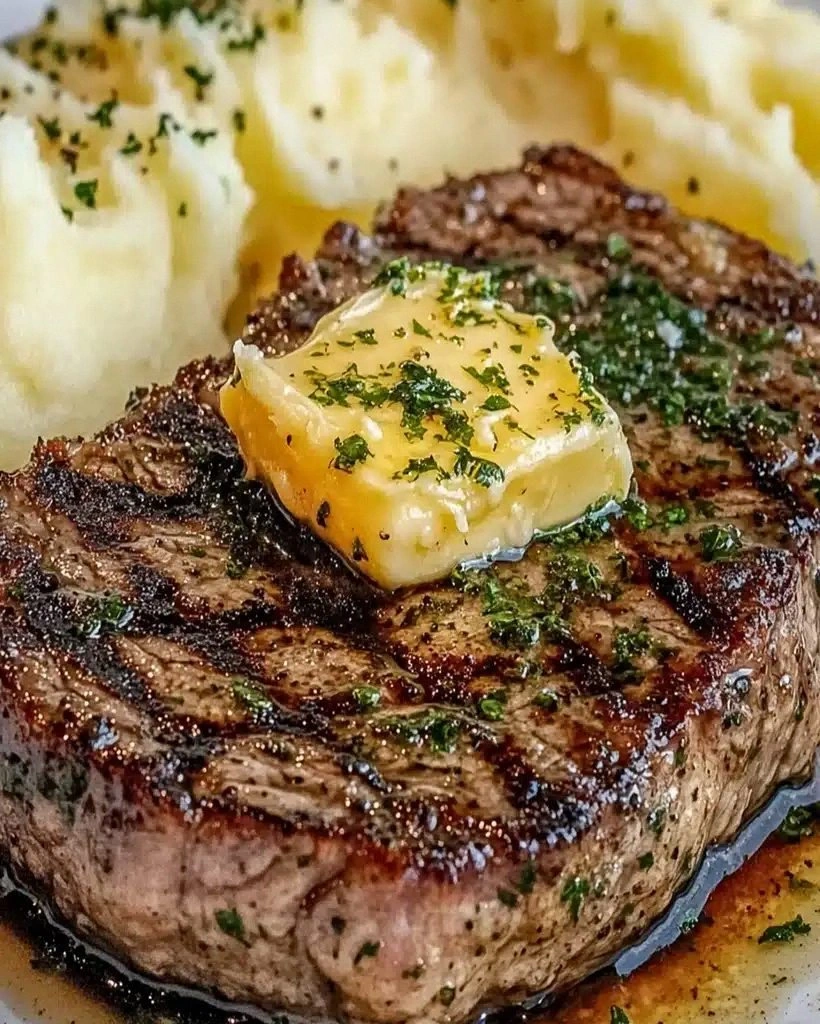
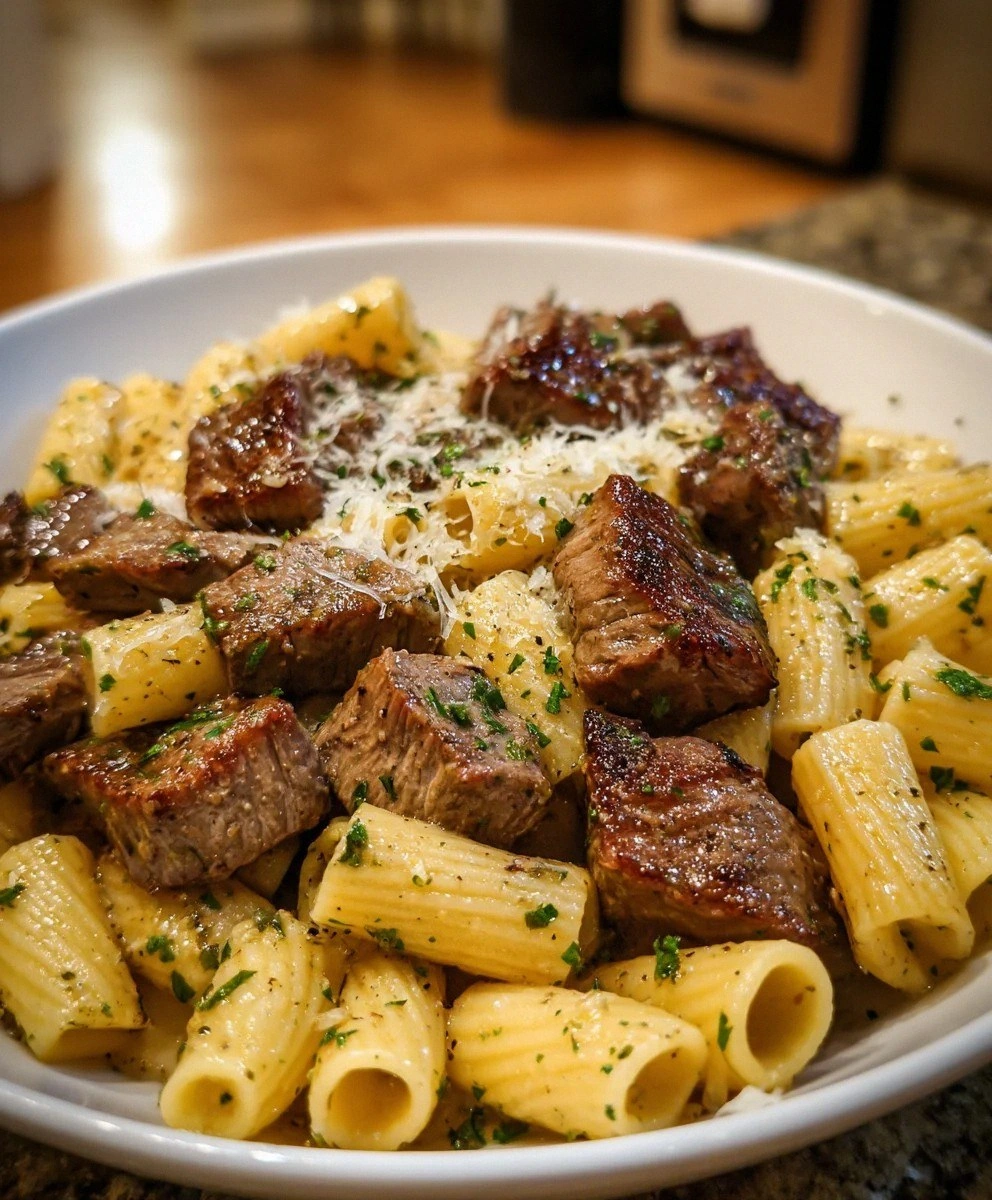
I still remember the first time I made this dish — it was a Tuesday night, I was starving, and my roommate had dared me to cook something that didn't come from a box. Thirty minutes later, the apartment smelled like a five-star steakhouse, and I was standing over the stove, shamelessly eating straight from the pan with a wooden spoon. The garlic butter steak tips were so tender they practically melted on contact, and the cheesy rigatoni was pulling those Instagram-worthy cheese stretches that make you question every other pasta dish you've ever eaten.
Here's the thing: most steak and pasta recipes get it completely wrong. They either overcook the steak until it resembles shoe leather, or they drown everything in so much cream that you can't taste the beef anymore. This version? It's the Goldilocks of comfort food — every element is perfectly balanced, from the crispy, caramelized edges of the steak to the silky cheese sauce that coats each ridge of rigatoni like velvet. The garlic butter doesn't just sit on top; it becomes part of the pasta's DNA, infusing every bite with that nutty, savory magic that makes you close your eyes involuntarily.
I've made this dish probably fifty times since that fateful Tuesday, and it's become my secret weapon for everything from date nights to "I need to impress my in-laws" dinners. The best part? It's deceptively simple. No fancy techniques, no ingredients you need to Google, no equipment you don't already own. Just honest-to-goodness technique that turns everyday supermarket ingredients into something that tastes like it came from a trattoria where the chef yells in Italian and everything costs twice your rent.
What really makes this recipe special is the way the steak juices mingle with the cheese sauce, creating this unctuous, beefy, garlicky elixir that you'll want to bottle and keep in your fridge for emergencies. The paprika and thyme don't just season the meat; they bloom in the hot butter and create this mahogany crust that shatters like thin ice when you bite into it. And here's the kicker — the whole thing comes together in one pot and one skillet. Less dishes, more deliciousness. Let me walk you through every single step — by the end, you'll wonder how you ever made it any other way.
What Makes This Version Stand Out
Restaurant-Quality Sear: We're cooking the steak tips in a screaming-hot cast iron skillet until they develop that coveted Maillard crust — those crispy, caramelized edges that make steakhouse steaks taste like they cost forty bucks. The secret is patting the meat absolutely dry and letting it come to room temperature first. Cold, wet meat steams instead of sears, and nobody wants gray, sad steak tips.
One-Pot Wonder: While the steak rests, we use the same skillet to build our cheese sauce, scraping up all those glorious browned bits (fond, if we're being fancy) that are basically liquid gold. This means every drop of that steak flavor ends up in your pasta instead of down the drain. It's like getting a two-for-one deal on deliciousness.
Garlic Butter That Actually Tastes Like Garlic: Most recipes murder the garlic, cooking it until it's bitter and acrid. We add it at the very end, letting the residual heat mellow it just enough while keeping that bright, punchy flavor that makes vampires flee and dinner guests swoon. Fresh garlic only — none of that pre-minced jarred stuff that tastes like disappointment.
The Cheese Ratio That Changes Everything: After testing this recipe more times than I care to admit, I found the sweet spot: equal parts Parmesan for depth and mozzarella for that Instagram-worthy cheese pull. The Parmesan melts into the sauce, making it nutty and complex, while the mozzarella creates those long, stretchy strands that make you feel like you're in a food commercial.
Steak That Stays Juicy: We cook the steak tips in two stages — first, a hard sear for flavor, then a gentle finish in the garlic butter. This prevents overcooking while ensuring every piece is kissed with that garlicky, buttery goodness. The result? Steak that cuts with a fork but still has that satisfying chew.
Make-Ahead Magic: This dish actually gets better as it sits, making it perfect for meal prep or dinner parties. The pasta absorbs the sauce, the flavors meld together, and reheating it with a splash of cream brings it right back to life. I've eaten this four days old and still caught myself making inappropriate food noises.
Weeknight Friendly: From fridge to table in 45 minutes, with most of that being hands-off pasta cooking time. No marinating, no special equipment, no techniques that require a culinary degree. Just honest cooking that delivers big flavors on a Tuesday when you're still wearing your work clothes.
Inside the Ingredient List
The Flavor Foundation
Let's talk steak tips — they're the unsung hero of the beef world. Cut from sirloin, they're naturally tender but still have enough character to stand up to bold flavors. When you sear them, the exterior develops this incredible crust while the inside stays pink and juicy. Skip the steak tips and use something like stew meat, and you'll be chewing until next Tuesday. Look for pieces that are deep red with some marbling — those little white flecks of fat are flavor bombs that melt during cooking.
Garlic is the backbone of this entire operation, and here's where most recipes fail: they cook it too early. Garlic burns faster than your ex's new relationship, turning bitter and ruining everything. We add it at the very end, letting the warm butter soften it just enough while keeping that bright, almost spicy flavor that makes this dish sing. Fresh only — the pre-minced stuff has been sitting in citric acid for months and tastes like garlic's depressed cousin.
The Texture Crew
Rigatoni might seem like an odd choice for a creamy sauce, but hear me out — those ridges and tubes are like little pasta caves that capture and hold onto the cheese sauce. Every bite delivers a perfect ratio of pasta to sauce, unlike smooth pastas where the sauce just slides off like a kid on a water slide. The key is cooking it just until al dente, because it'll keep cooking when we mix it with the hot sauce. Mushy pasta is a crime against humanity, and I won't stand for it in my kitchen.
Heavy cream is what transforms our sauce from "cheese scattered over pasta" to "liquid velvet that coats every surface." Don't even think about using half-and-half or milk — they don't have enough fat to emulsify with the cheese, and you'll end up with a grainy, broken mess. The cream should be cold when it hits the pan, which helps it thicken properly without curdling. This isn't the place to count calories; this is the place to make something transcendent.
The Unexpected Star
Worcestershire sauce is my secret weapon in pretty much everything, but here it plays a crucial role. That fermented, tangy, umami-packed liquid adds depth that makes people ask "what's in this?" without being able to put their finger on it. It's like adding a bass line to a song — you might not consciously notice it, but you'd miss it if it were gone. Just a dash does the trick; too much and your dish tastes like a steakhouse exploded.
Paprika isn't just for color — the sweet, almost fruity flavor balances the richness of the cream and beef. I use regular paprika here, not smoked, because we're building layers of flavor, not starting a bonfire. It blooms in the hot butter, releasing its essential oils and turning the sauce this gorgeous sunset color that makes everyone think you know what you're doing.
The Final Flourish
Parmesan and mozzarella are the dynamic duo of the cheese world — Parmesan brings the funk and depth, while mozzarella brings the stretch and comfort. Don't you dare use the powdered stuff in the green can; that's not cheese, that's a crime. Buy a wedge and grate it yourself — it takes thirty seconds and tastes like actual Parmesan instead of sawdust. The mozzarella should be the low-moisture kind, not fresh buffalo, unless you want a watery sauce that separates like a bad relationship.
Everything's prepped? Good. Let's get into the real action...
The Method — Step by Step
Start by bringing a large pot of salted water to a boil — and I mean properly salted, like the ocean. This is your only chance to season the pasta itself, and bland pasta is a tragedy that even the best sauce can't fix. While you're waiting, pat your steak tips dry with paper towels until they look matte, not shiny. Moisture is the enemy of a good sear, and we're going for crust that crackles like a good crème brûlée. Season generously with salt, pepper, paprika, and thyme, pressing the spices into the meat so they stick instead of falling off like glitter.
Heat your largest skillet over medium-high heat until a drop of water sizzles and disappears instantly. Add the olive oil — it should shimmer and move like water, not smoke like a chimney. Lay in your steak tips in a single layer, working in batches if necessary because overcrowding leads to steaming, and steamed steak is sad steak. Let them cook undisturbed for 3-4 minutes until they release easily from the pan and have that gorgeous mahogany crust. Flip them once, cook for another 2-3 minutes for medium-rare, then transfer to a plate to rest — all those juices need time to redistribute instead of flooding your cutting board.
Your pasta water should be boiling now, so add the rigatoni and set a timer for 2 minutes less than package directions. Trust me on this — we'll finish cooking it in the sauce, and nothing ruins a dish faster than mushy pasta that disintegrates when you try to mix it. Stir it for the first 30 seconds to prevent sticking, then let it do its thing while we work on the sauce. Reserve at least a cup of that starchy pasta water before draining — it's liquid gold for adjusting sauce consistency later.
Now for the fun part: reduce the heat to medium and add the butter to the same skillet, scraping up all those beautiful browned bits with a wooden spoon. This is pure flavor concentration happening right before your eyes — those little black specks aren't burnt, they're steak essence. Once the butter foams and starts to smell nutty, add the beef broth and Worcestershire sauce, letting it bubble away for about 2 minutes until reduced by half. The sauce should coat the back of a spoon and taste like concentrated steakhouse.
Pour in the heavy cream and watch it transform from white to caramel-colored as it mingles with the beef juices. Let it simmer gently — not boil violently — for about 3 minutes until it thickens enough to leave a trail when you drag your spoon through. This is when you add your secret weapon: a splash of that starchy pasta water. The starch helps emulsify the sauce, keeping it silky instead of greasy. Start with 1/4 cup and add more if needed — you want it just thick enough to coat the pasta without being gloppy.
Time for the cheese avalanche: reduce heat to low and add your Parmesan a handful at a time, whisking constantly until each addition melts completely. Don't rush this — adding it all at once creates a stringy, clumpy disaster that looks like something from a horror movie. Once the Parmesan is incorporated, add the mozzarella and stir just until it melts and creates those long, stretchy strands. The sauce should be glossy and coat your spoon like liquid velvet.
Drain your pasta (remember, it should be quite firm) and add it directly to the sauce. Toss everything together for about 2 minutes, letting the pasta finish cooking while absorbing all that cheesy, beefy goodness. If it looks too thick, add pasta water a tablespoon at a time — the sauce should cling to each tube without pooling at the bottom of the pan. This is also when you add your steak tips back, along with any accumulated juices from the resting plate.
Remove from heat and add the minced garlic and half the parsley, tossing to combine. The residual heat will tame the garlic's bite while keeping it bright and punchy. Taste and adjust — it might need more salt (the pasta absorbed some), a crack of black pepper, or if you're feeling fancy, a squeeze of lemon to cut through the richness. Serve immediately in warmed bowls, garnished with the remaining parsley and an extra shower of Parmesan because we're not animals.
That's it — you did it. But hold on, I've got a few more tricks that'll take this to another level...
Insider Tricks for Flawless Results
The Temperature Rule Nobody Follows
Here's what separates good cooks from great ones: understanding carryover cooking. Your steak will continue cooking for about 5 degrees after you remove it from heat, so pull it when it's 125°F for medium-rare (it'll rise to 130°F while resting). I use an instant-read thermometer because cutting into meat to check doneness is like opening the oven door every two minutes — it ruins everything. If you don't have a thermometer, use the finger test: press the steak with your finger — it should feel like the fleshy part of your palm when you touch your thumb to your middle finger.
And please, for the love of all that's delicious, let your meat rest on the counter for 30 minutes before cooking. Cold steak in a hot pan contracts, squeezing out all the juices and leaving you with dry, tough meat. It's like trying to stretch a cold rubber band — it snaps instead of flexing. Room temperature steak cooks more evenly, stays juicier, and develops a better crust because the surface isn't busy warming up the cold center.
Why Your Nose Knows Best
Your nose is the most underrated kitchen tool, and this recipe proves it. When the garlic hits the warm butter, it should smell bright and almost spicy — if it smells bitter or acrid, you've gone too far. The same goes for the cheese sauce: properly melted cheese smells nutty and savory, while overheated cheese smells like old gym socks. Trust your instincts — if something smells wrong, it probably is.
I once had a friend who insisted on following recipes to the letter, even when her kitchen smelled like a chemical factory. Don't be that friend. Cooking is about using all your senses, not just following instructions like a robot. If your sauce smells amazing after 2 minutes of simmering, it's probably done, even if the recipe says 3 minutes. Your nose knows when the Maillard reaction has worked its magic on the steak, when the garlic has mellowed just enough, and when the cheese has reached peak meltiness.
The 5-Minute Rest That Changes Everything
After you toss everything together, resist the urge to serve immediately. Let the pan sit off heat for 3-5 minutes — this allows the pasta to absorb some sauce, the flavors to meld, and the whole thing to come together as one cohesive dish instead of separate components. It's like letting a good wine breathe; the transformation is subtle but magical. The sauce will thicken slightly, coating each piece of pasta more evenly, and the steak will relax instead of being tense from the heat.
This is also when you taste and make final adjustments. Maybe it needs a splash more cream if it's gotten too thick, or a pinch of salt to wake up all the flavors. Sometimes I add a tiny splash of balsamic vinegar for acidity, or a knob of cold butter for extra richness. This is your moment to make it perfect for your palate. I've never made this dish exactly the same way twice, and that's the beauty of it — it evolves based on what you're craving that day.
Creative Twists and Variations
This recipe is a playground. Here are some of my favorite ways to switch things up:
The Spicy Southern Remix
Add a tablespoon of Cajun seasoning to your steak rub, swap the paprika for smoked paprika, and stir in a diced jalapeño with the garlic at the end. The result is a dish that tastes like New Orleans and Italy had a delicious baby. Top with crumbled bacon and extra hot sauce if you're feeling dangerous. I serve this version when I want to clear my sinuses and impress people who think I can't handle heat.
The Mushroom Lover's Dream
Sauté a pound of mixed mushrooms (cremini, shiitake, oyster) in the steak fat before making the sauce. They'll soak up all that beefy goodness and add an earthy depth that makes vegetarians weep with envy. Use mushroom broth instead of beef broth, and finish with a splash of dry sherry. The mushrooms add meaty texture without competing with the steak, creating a dish that's somehow both lighter and more satisfying.
The Green Goddess Edition
Stir in a cup of fresh spinach and a handful of peas with the pasta during the last 2 minutes of cooking. The vegetables wilt into the sauce, adding color and nutrients that let you pretend this is health food. Add fresh basil and tarragon along with the parsley for a springtime version that tastes like sunshine. I make this when I need to convince myself that eating a pound of cheese is somehow balanced by three leaves of spinach.
The Surf and Turf Upgrade
Scallops and steak tips are a match made in heaven. Sear the scallops in the same pan after the steak, building even more fond for your sauce. Add them back at the very end so they stay tender and sweet. The briny sweetness of the scallops plays beautifully against the rich, garlicky sauce. It's like taking your taste buds on a vacation to the coast, minus the sand in uncomfortable places.
The Breakfast of Champions
Serve the steak and pasta topped with a runny fried egg, because everything is better with a golden yolk that breaks and mingles with the sauce. Add some crispy breakfast sausage crumbled on top, and suddenly this becomes acceptable morning food. I've served this at brunch and watched grown adults cry tears of joy. The egg yolk creates an even silkier sauce that clings to everything like delicious edible glue.
The Vegan-ish Compromise
Replace the steak with roasted cauliflower florets tossed in the same spice blend, use coconut cream instead of heavy cream, nutritional yeast instead of Parmesan, and vegan mozzarella for the cheese pull. Is it the same? Absolutely not. Is it surprisingly delicious and will it make your vegan friends feel included? You bet. The cauliflower develops crispy edges that provide texture, and the coconut cream adds a subtle sweetness that works surprisingly well with the garlic.
Storing and Bringing It Back to Life
Fridge Storage
This dish keeps beautifully in the refrigerator for up to 4 days, though I doubt it'll last that long. Store it in an airtight container — I prefer glass because it doesn't absorb garlic odors that will haunt your next batch of yogurt. Let it cool completely before refrigerating, but don't leave it out for more than 2 hours unless you enjoy playing food poisoning roulette. The sauce will thicken considerably as it chills, but that's where our reheating magic comes in.
Freezer Friendly
Believe it or not, this freezes like a dream. Portion it into freezer bags, squeeze out all the air, and freeze flat for up to 3 months. Thaw overnight in the refrigerator (not on the counter — we're not trying to grow science experiments), then reheat gently. The texture changes slightly — the pasta gets a bit softer — but the flavors actually intensify, making this perfect for emergency comfort food situations. Pro tip: freeze individual portions so you can pull out exactly what you need without defrosting the whole batch.
Best Reheating Method
Forget the microwave unless you enjoy rubbery steak and separated sauce. Instead, add your portion to a skillet with a splash of cream or milk, cover, and heat over medium-low, stirring occasionally. The gentle heat warms everything through without overcooking the steak or turning the sauce into an oil slick. If it's too thick, add pasta water (if you were smart enough to save some) or regular water a tablespoon at a time. Add fresh parsley and a sprinkle of fresh Parmesan at the end to wake everything up. It's like hitting the refresh button on your leftovers.